Tag: Nordic Travel

  • Norway Weather in Summer: Why It’s Cool and 4 Seasonal Outfit Tips

    Norway Weather in Summer: Why It’s Cool and 4 Seasonal Outfit Tips

    SummaryNorway weather stays cool even in summer, and conditions vary widely by region. This guide covers temperatures in Oslo, Bergen, and Tromsø, what to wear in summer, spring/fall, and winter, and how to pack warm for an aurora trip.

    Even at the height of summer, Norway’s cool climate can make it feel chilly on a boat deck, especially with added wind exposure.

    Because of its high latitude, Norway weather can vary sharply between cities, fjords, and the north, even within the same season.

    That’s why packing only short sleeves often turns into a regretful mistake.

    This guide covers why Norway weather differs so much by region, and exactly what to pack for summer, spring/fall, and winter.
    If your itinerary includes a fjord cruise or aurora watching, where you’ll spend long hours outdoors, pay close attention.
    Norway weather

    Why Does Norway Weather Vary So Much by Region?
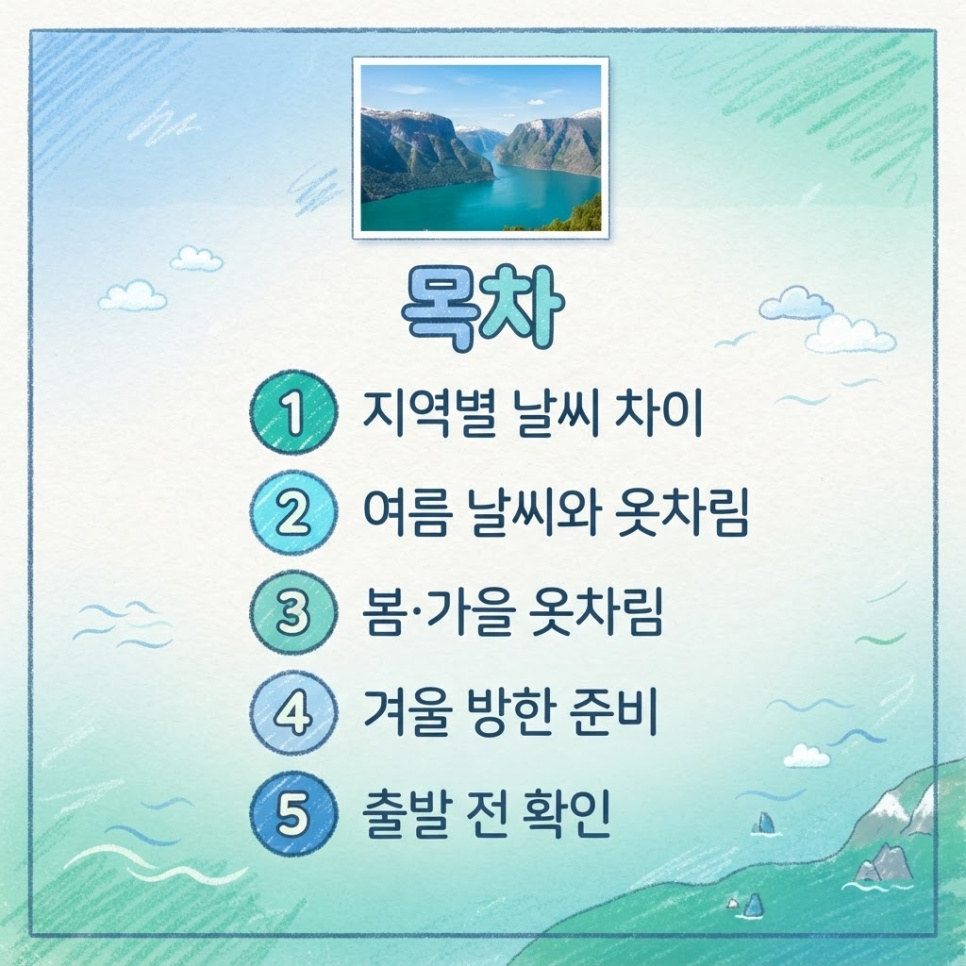
    Norway weather image 2

    The short answer: Norway stretches a long way from north to south and mixes coastal, inland, and mountain terrain, so temperatures can differ sharply even within the same country.

    Norway weather refers to how Oslo in the south, Bergen on the west coast, and Tromsø in the north can each show different temperatures and rainfall on the very same day.

    That means if your trip includes fjords or mountain areas, checking only the city forecast may not be enough.
    It’s worth getting into the habit of checking the forecast separately for each region you’ll visit.

    Norway weather image 3

    Region Average July Temperature Notes
    Oslo (South) 16–22°C City-focused trips, relatively mild
    Bergen (West Coast) 16–19°C Gateway to the fjords, frequent rain
    Tromsø (North) 10–17°C Cool even in summer; aurora season is separate

    ※ The average temperatures above are reference figures compiled from travel information sites, and actual temperatures can vary year to year, so we recommend checking the official weather forecast again just before departure.

    Key Point
    Because Norway stretches so far from north to south, temperatures can differ significantly between regions even on the same day and in the same season.
    If your trip includes fjords or mountain areas, don’t rely on the city forecast alone.

    Norway weather image 4

    Checklist · Things to Check Before Your Trip
    ✅ Temperature in the cities you’ll visit
    ✅ Weather in fjord and mountain areas
    ✅ Chance of rain
    ✅ Wind strength
    ✅ Sunrise and sunset times

    How Warm Is Norway Weather in Summer, Really?
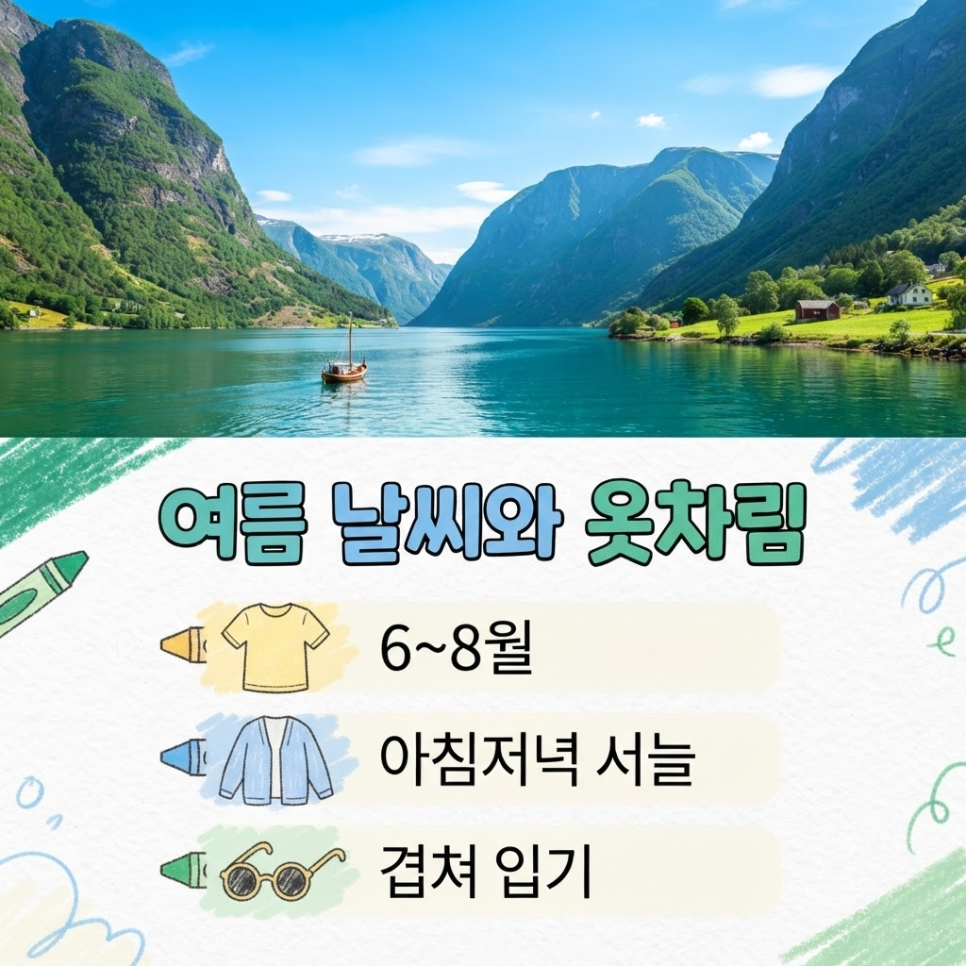
    Norway weather image 5

    The short answer: Norwegian summer (June–August) isn’t hot and humid — it tends to stay cool overall.

    Norway weather in summer refers to a cool summer climate where, according to travel information sites, southern cities average around 16–22°C while the north stays in the 10s°C.

    That said, temperatures can drop sharply in the morning and evening, and the wind on a fjord cruise deck can make it feel noticeably colder than the thermometer suggests.
    It’s common to wear short sleeves at midday and then need a jacket the moment you step onto the cruise deck.
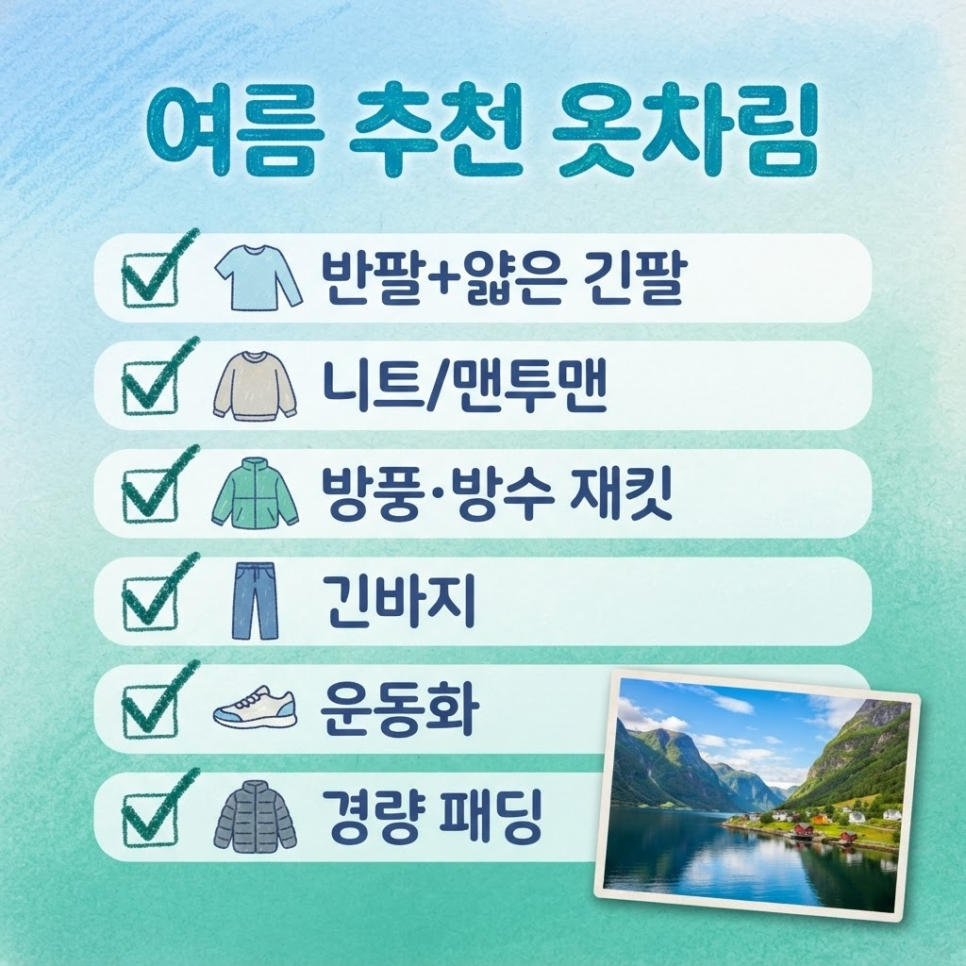
    Norway weather image 6

    Checklist · Recommended Summer Outfit
    ✅ Short sleeves and thin long sleeves
    ✅ A knit sweater or sweatshirt
    ✅ A windproof, waterproof jacket
    ✅ Long pants
    ✅ Comfortable sneakers
    ✅ A lightweight puffer jacket if needed
    Note
    If your itinerary includes northern regions like Tromsø or the Lofoten Islands, packing based on southern-city weather alone may not be enough.
    Bring an extra thin puffer jacket or a heavier knit.

    What Should You Wear for Norway Weather in Spring and Fall?

    Norway weather image 7

    The short answer: temperatures can swing a lot within a single day in spring and fall, so layering is your best strategy.

    Norway weather in spring and fall means a changeable shoulder-season climate with a big gap between daytime and nighttime temperatures, plus frequent rain and wind.

    In spring, patches of snow can still linger depending on the region, and as fall progresses, daylight hours shrink and temperatures gradually drop.
    Rather than relying on one heavy coat, it’s far more practical to combine long sleeves, a knit, and a windproof jacket that you can adjust as conditions change.
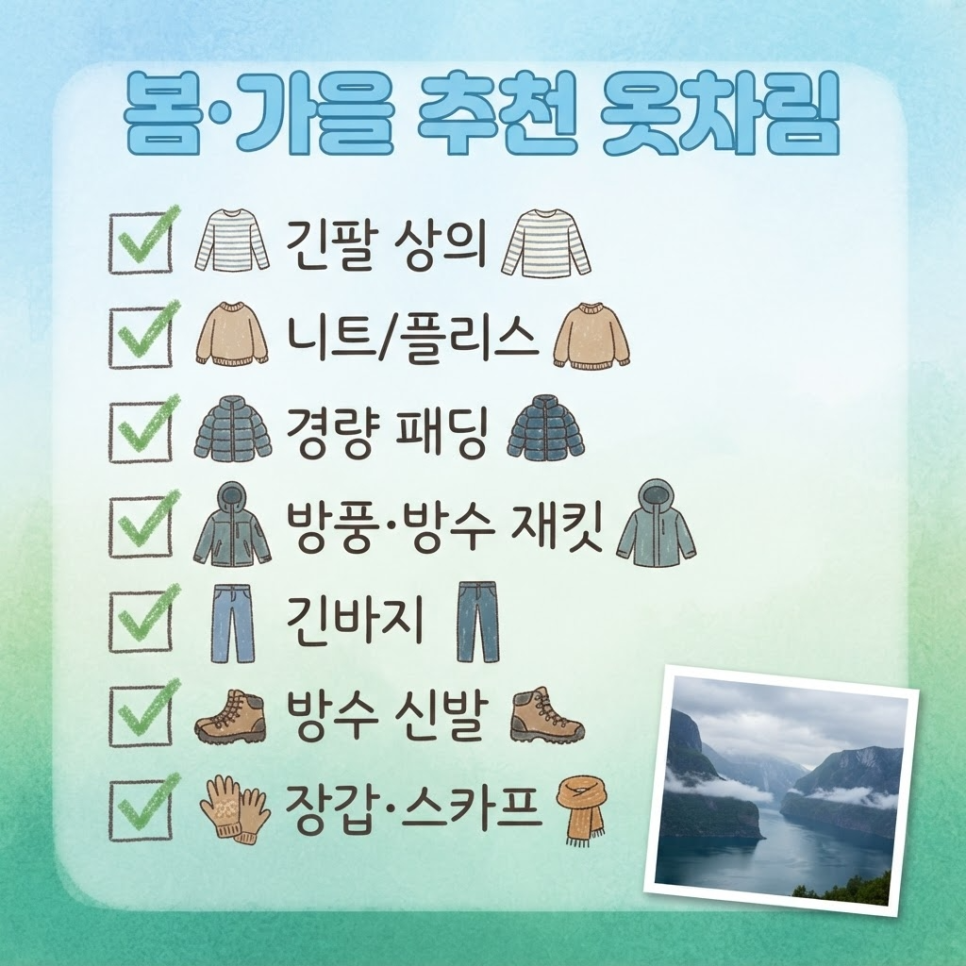
    Norway weather image 8

    Checklist · Recommended Spring/Fall Outfit
    ✅ Long-sleeve tops
    ✅ A knit sweater or fleece
    ✅ A lightweight puffer jacket
    ✅ A windproof, waterproof jacket
    ✅ Long pants
    ✅ Water-resistant shoes
    ✅ Thin gloves or a scarf

    If your itinerary is heavy on waterfalls, fjords, and mountain viewpoints, pack one extra warm layer compared to a mostly city-based trip.


    How Do You Prepare for Winter Norway Weather and Stay Warm?

    Norway weather image 9

    The short answer: regional temperature differences widen further in winter, and staying warm matters even more on itineraries like aurora watching, where you’ll be outdoors for long stretches.

    Norway weather in winter refers to a harsh cold climate, mainly in the north and inland areas, where temperatures drop sharply and snow and wind often combine.

    According to Visit Tromsø, winter temperatures during aurora season in northern areas like Tromsø are reported to range widely from as low as -25°C to as high as 5°C, and actual conditions can vary by year and by timing.
    Because watching the aurora usually means waiting in one spot for a long time rather than moving around, you need to dress far more carefully than you would for an ordinary winter outing.

    Key Point
    Wool base layers are generally recommended for a winter trip to Norway because they are known for wicking away sweat while still keeping you warm.
    Cotton underwear, on the other hand, can hold onto sweat and cool down against your skin, actually pulling heat away from your body — it’s best avoided.
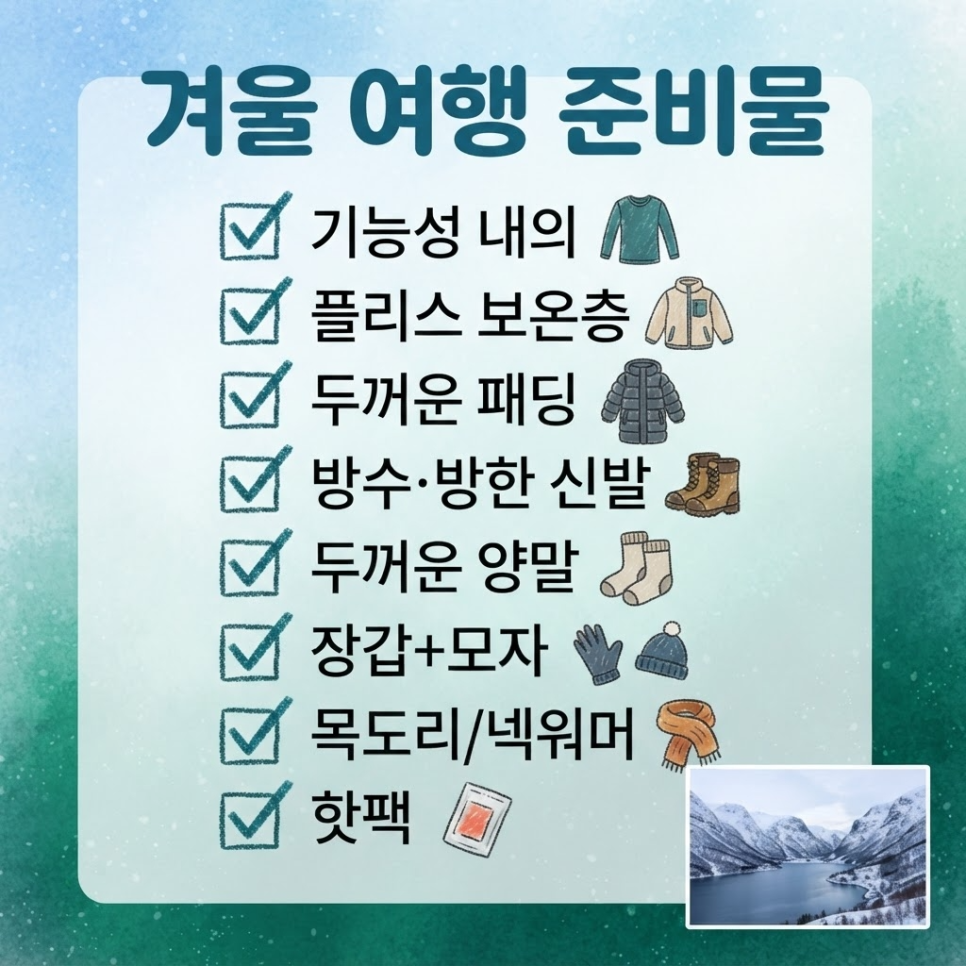
    Norway weather image 10

    Checklist · Winter Travel Essentials
    ✅ Functional (wool) base layers
    ✅ A warm mid-layer like fleece
    ✅ A heavy puffer jacket
    ✅ Waterproof, insulated boots
    ✅ Thick socks
    ✅ Gloves and a hat
    ✅ A scarf or neck warmer
    ✅ Hand warmers

    Since hands and feet tend to get cold first, pack proper footwear and gloves along with your outerwear.
    Some also suggest that mittens, which let your fingers share warmth, hold heat better than regular gloves.
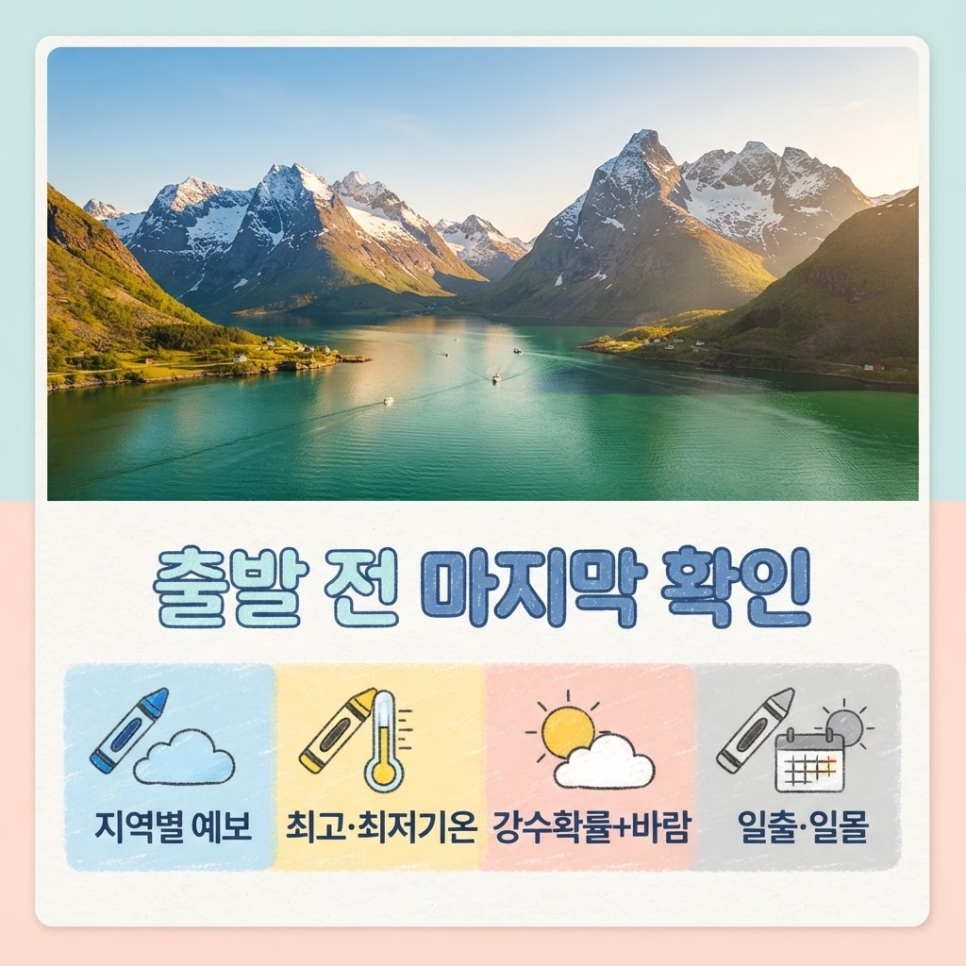

    Norway weather image 11

    In the end, the best way to handle Norway weather isn’t about the season alone — it comes down to layering.

    Average temperatures are only a reference point, since rain and wind during your actual trip can change from day to day.
    If you keep checking the region-specific forecast right up until departure and pack a windproof, waterproof outer layer, you can handle Norway’s changeable weather far more comfortably.
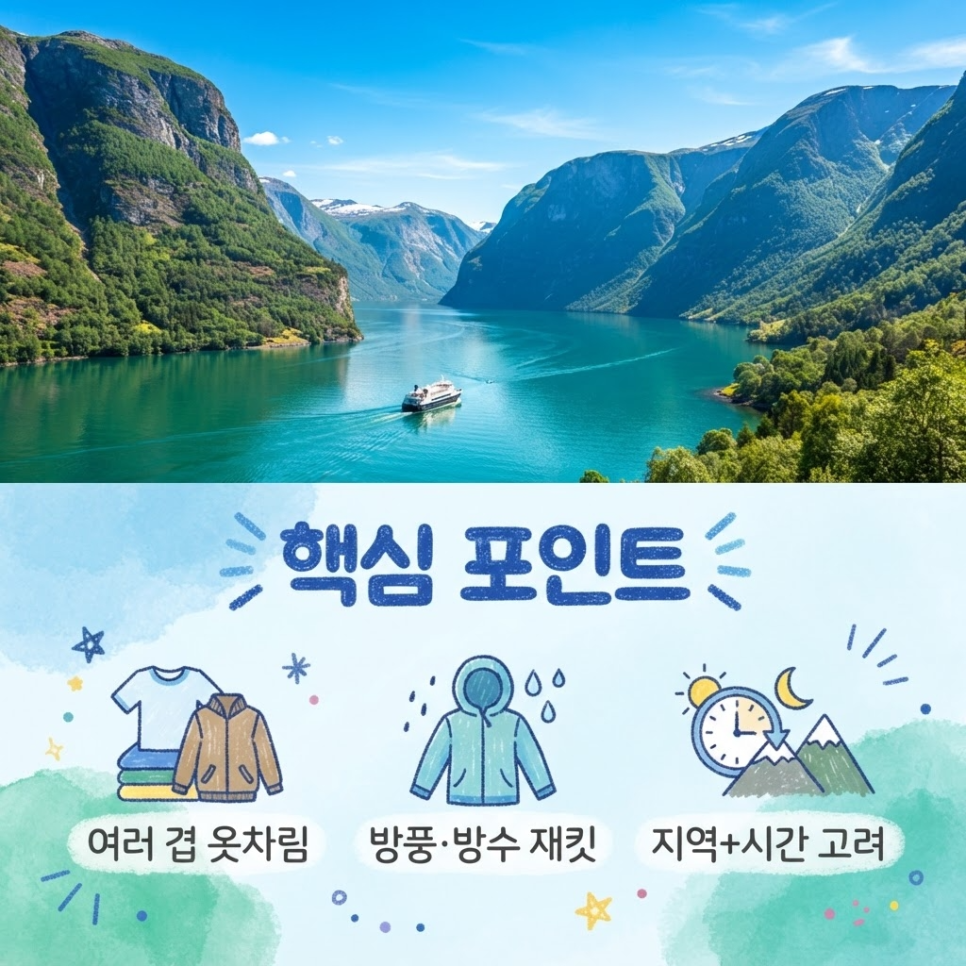
    Norway weather image 12

    If you’re planning a cruise through the fjords, you might also want to check schedules and packing information at [Dr. Cruise] No-Markup Premium Cruise Travel Home.


    Frequently Asked Questions
    Norway weather image 13

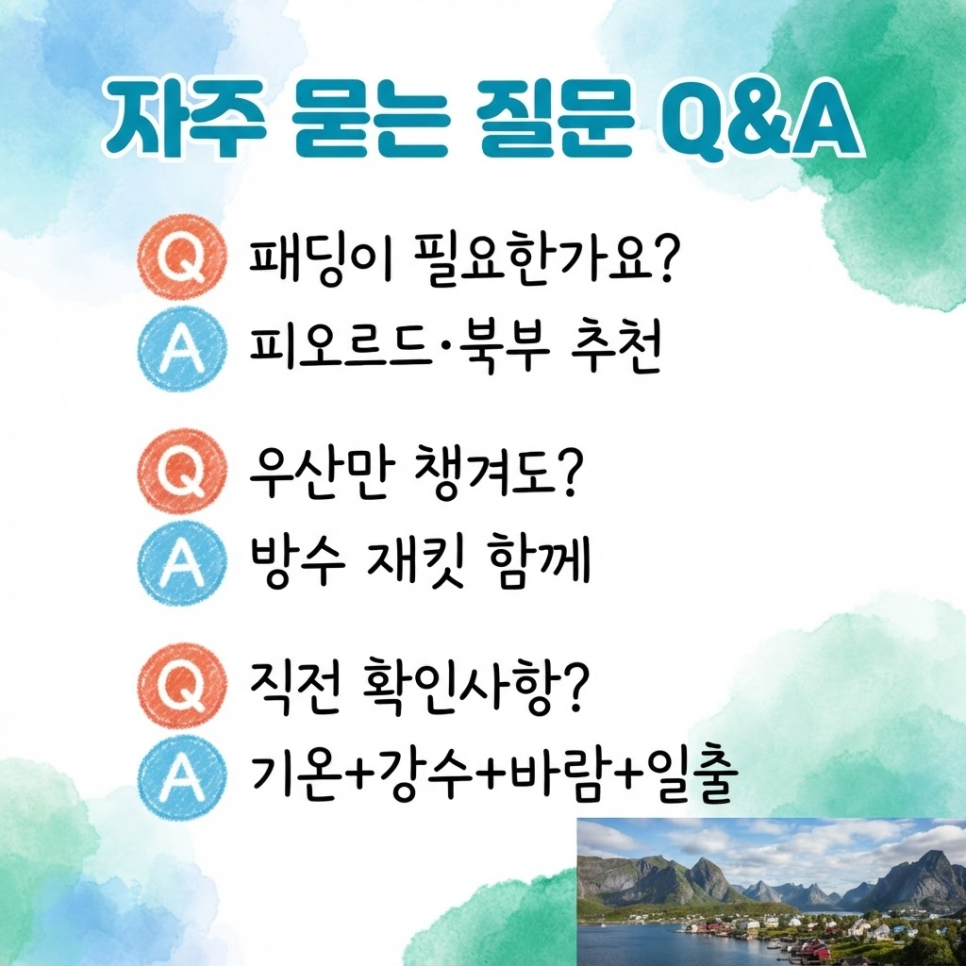
    1. Do I need a puffer jacket in Norway even in summer?
    It depends on the region and itinerary. A light jacket may be enough for city sightseeing, but if you’re visiting fjords, mountain areas, or the north, it’s safer to pack a lightweight puffer jacket.

    2. Is an umbrella enough for a Norway trip?
    Rain and wind often hit together, so a waterproof, windproof jacket is far more practical than an umbrella.

    3. What should I check right before departure?
    It’s best to check the high and low temperatures, chance of rain, wind strength, and sunrise/sunset times for each region you’ll visit, then make final adjustments to your outfit.

    4. How cold should I prepare for if I want to see the aurora?
    According to sources like Visit Tromsø, winter temperatures at northern aurora-viewing spots like Tromsø can drop as low as -25°C, so you’ll need full-body layering — from wool base layers to insulated boots.

    5. Do I need winter clothes for a spring or fall trip to Norway?
    You don’t need clothing as heavy as winter gear, but because temperatures swing a lot within a single day, it’s best to prepare layers — a knit or fleece plus a windproof jacket — that you can combine as needed.


    References

    · VisitNorway (official tourism site of Norway), “Summer in Norway: Climate, weather and temperatures,” Visitnorway.com, 2026. View source
    · Visit Tromsø (official tourism site of Tromsø), “What to wear in Tromsø,” Visittromso.no, 2026. View source


    This article is provided for general information purposes only and does not replace advice tailored to your individual situation.
  • Faroe Islands Things to Do: Top 7 Spots for a Unique Nordic Trip

    Faroe Islands Things to Do: Top 7 Spots for a Unique Nordic Trip

    SummaryWe’ve rounded up the best Faroe Islands things to do, split into natural landmarks and village attractions. Check out iconic sights like Múlafossur Falls and Lake Sørvágsvatn, plus a full pre-trip checklist.

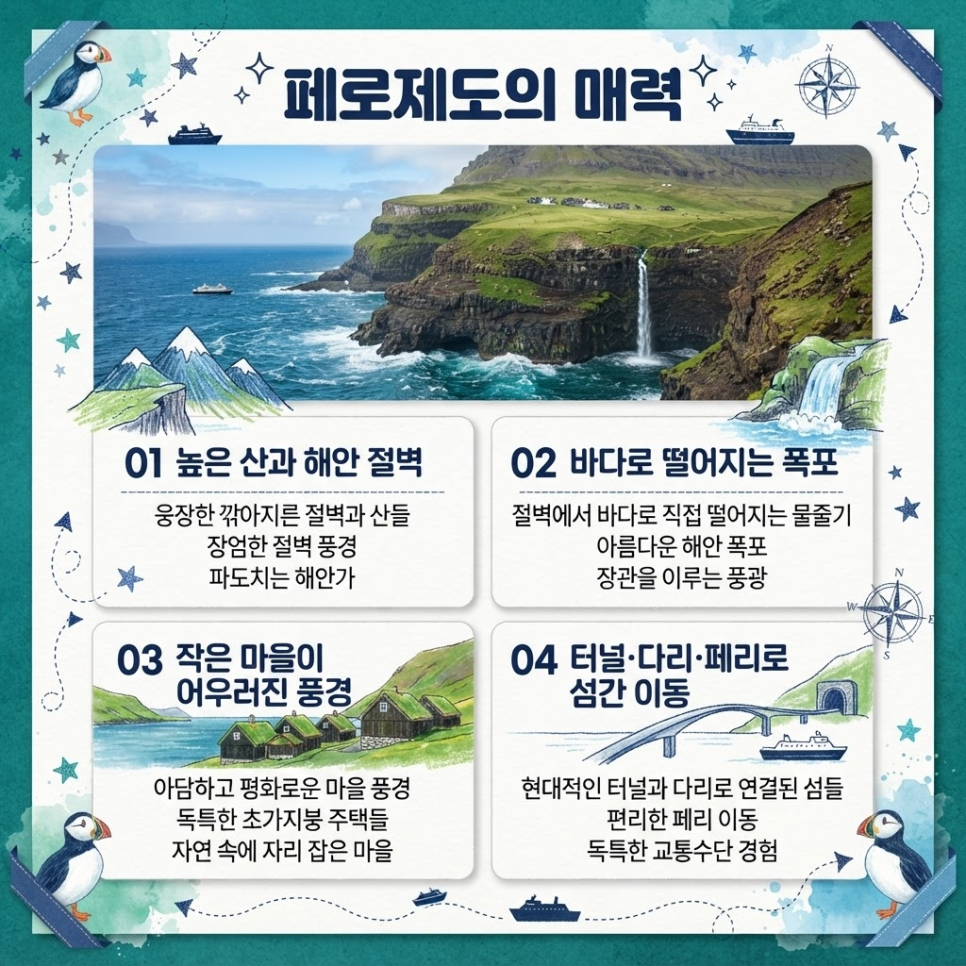
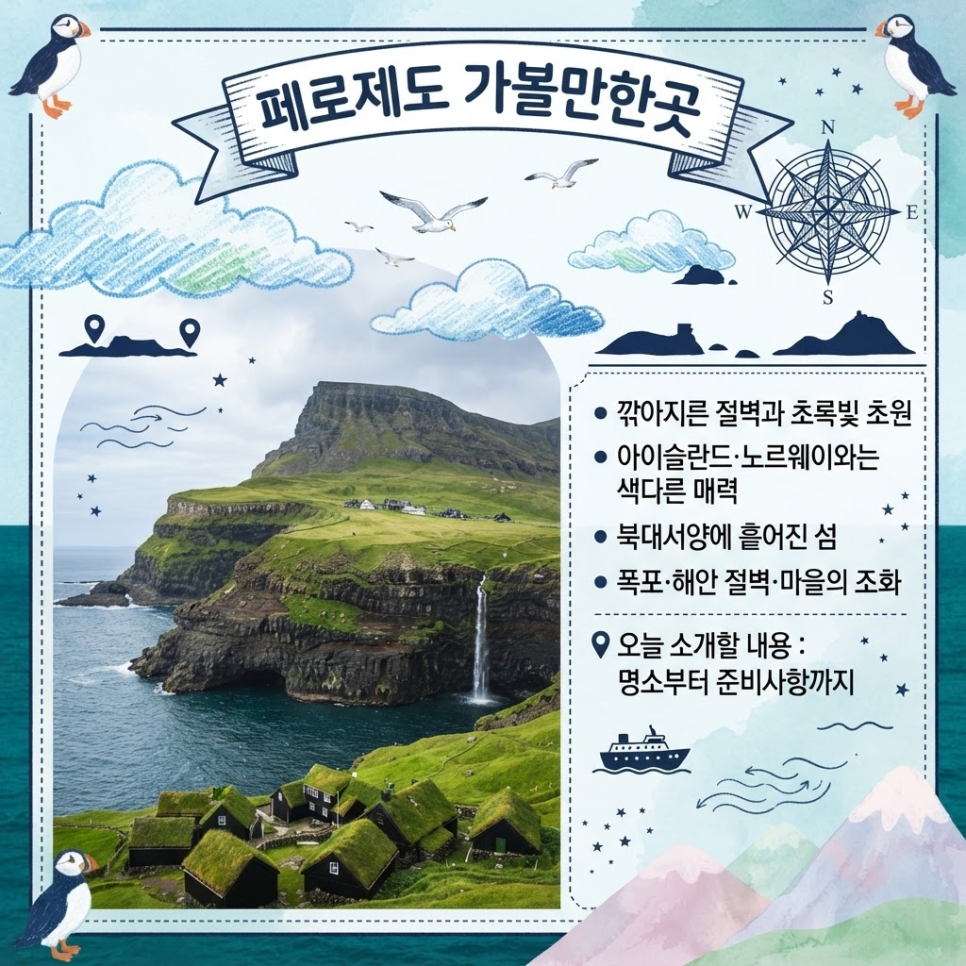
    A waterfall plunges straight from a cliff into the sea,
    while a village of grass-roofed houses sits on a green meadow above it.

    The scene looks almost too surreal to be real — and it’s the Faroe Islands, tucked away in the middle of the North Atlantic.

    If you’ve already been to Iceland and Norway
    and you’re looking for a slightly different Nordic destination, this one is worth a look.

    In this guide, we cover the best Faroe Islands things to do, organized into natural landmarks and village attractions, along with packing tips and route-planning advice for before you go. From iconic Faroe Islands sights like Múlafossur Falls and Lake Sørvágsvatn to tips on getting around locally, you’ll find everything you need in one place.

    Faroe Islands things to do

    What Is the Faroe Islands?

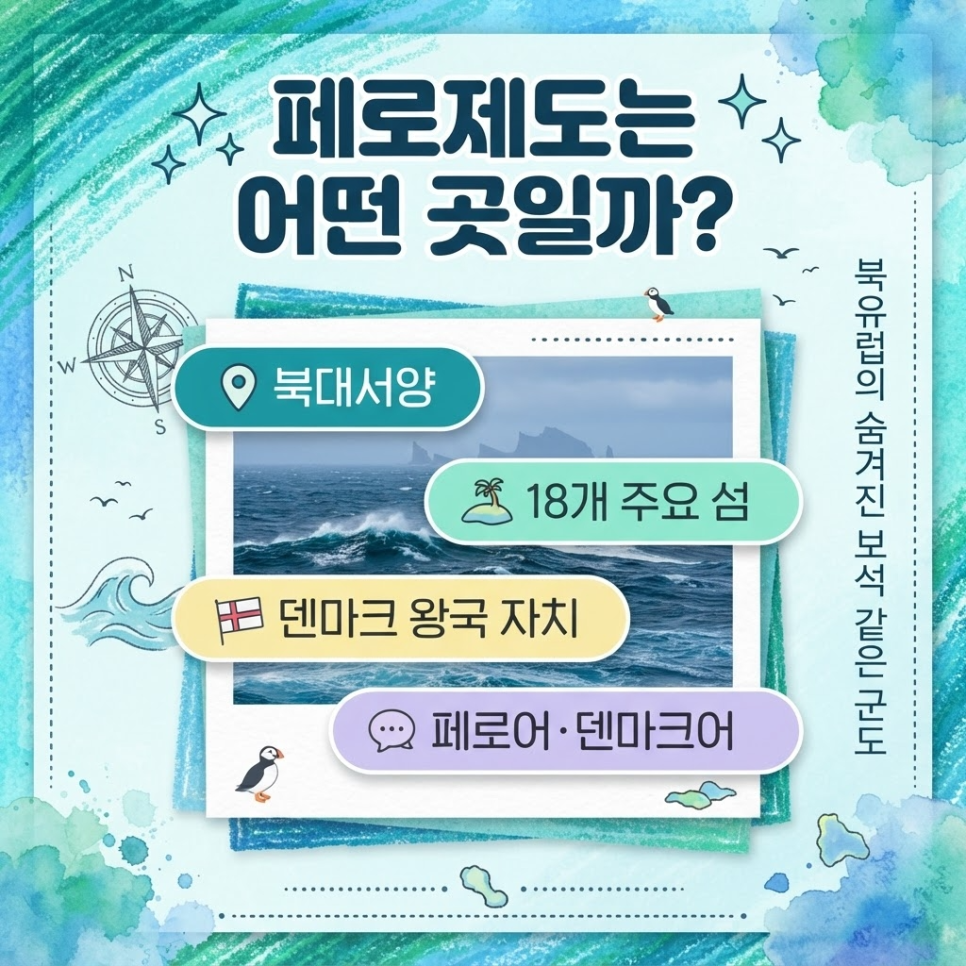
    The Faroe Islands is an archipelago of 18 main islands located in the North Atlantic.
    It belongs to the Kingdom of Denmark but holds broad self-governing authority, allowing it to maintain a language and culture distinct from mainland Denmark.

    It has run its own home-rule government since 1948,
    and handles most domestic matters — including education, healthcare, and fisheries — on its own.
    Denmark’s government is only responsible for a few areas, such as foreign affairs and defense.

    Geographically, it sits in the North Atlantic between Iceland, Norway, and Scotland,
    which is why it appeals to travelers looking for a more distinctive Nordic destination.

    Faroe Islands things to do, image 2

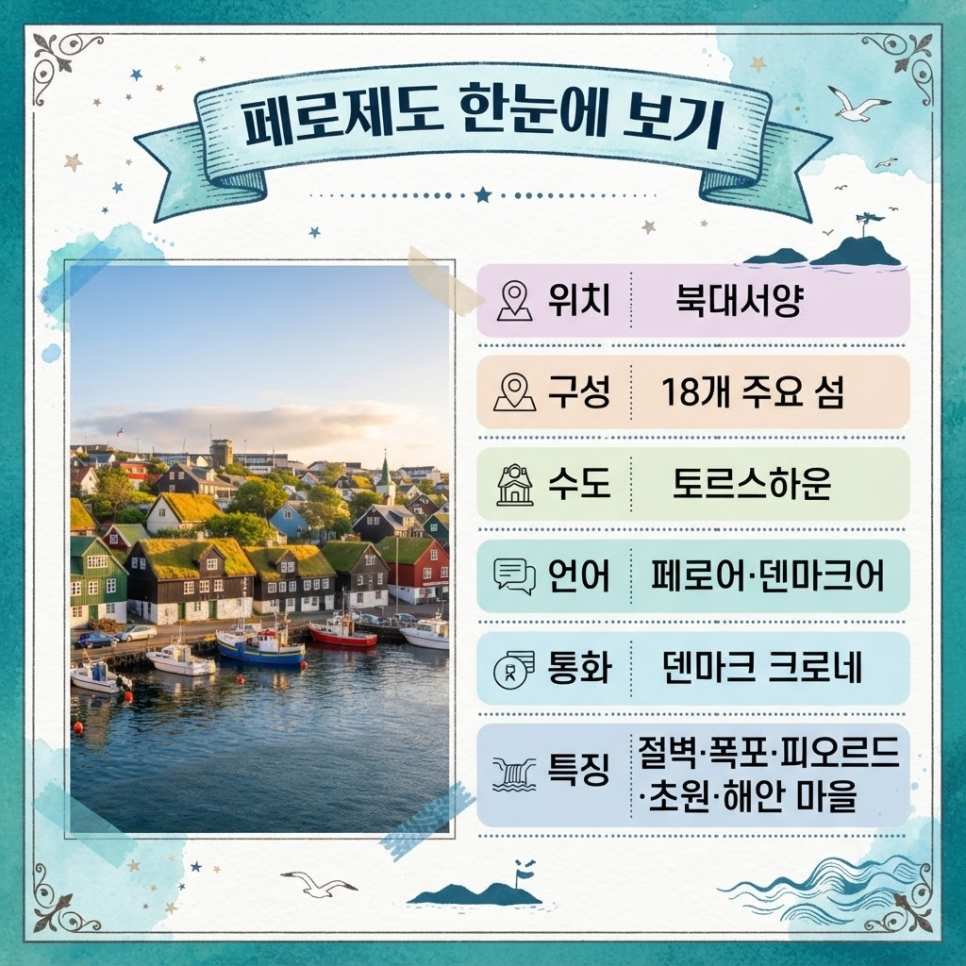
    📋 Faroe Islands at a Glance
    · Location: North Atlantic
    · Made up of: 18 main islands (16 inhabited)
    · Capital: Tórshavn
    · Languages: Faroese, Danish
    · Currency: Faroese banknotes, on par with the Danish krone
    · Highlights: cliffs, waterfalls, fjords, meadows, coastal villages

    Faroe Islands things to do, image 3

    You can travel between islands by tunnel, bridge, or ferry,
    but since the best option varies by region, it’s a good idea to map out your route before you go.


    Faroe Islands Things to Do: Which Natural Landmarks Should You See?

    The heart of any list of Faroe Islands things to do is scenery where cliffs, waterfalls, and meadows come together.
    Even within this small island nation, each region looks completely different, so it’s most efficient to build your route around the standout spots.

    Faroe Islands things to do, image 4

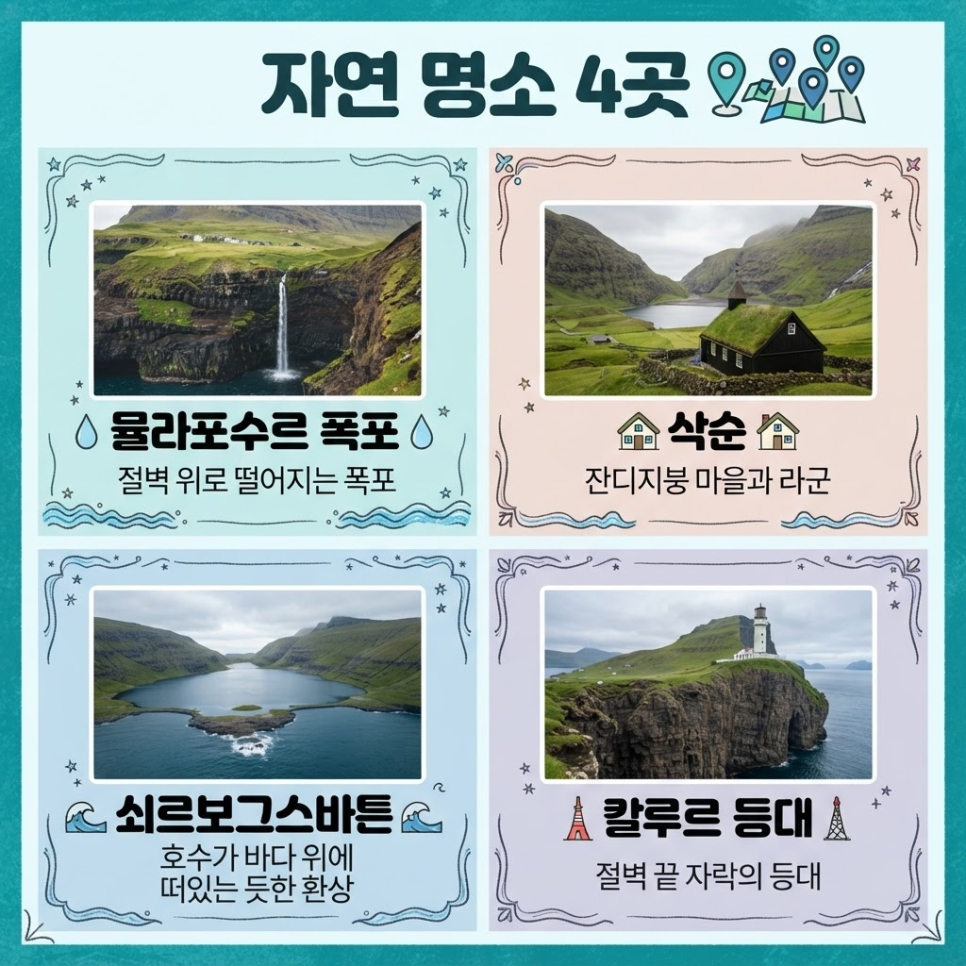
    Múlafossur Falls

    Located near the village of Gásadalur,
    this waterfall is famous for the way its water drops straight from a cliff into the sea.

    With green meadows, a village, and the rugged North Atlantic all in one frame,
    it’s one of the most iconic images used to represent the Faroe Islands.
    It pairs well with a visit to Gásadalur village.

    Saksun

    This small village is surrounded by mountains, and its traditional grass-roofed houses and lagoon give it a peaceful atmosphere.

    Some of the surrounding land and paths may be private property or have access restrictions,
    so it’s safest to check local signage and rules as you explore.

    Lake Sørvágsvatn

    This lake sits remarkably close to the ocean,
    and from certain viewpoints it creates the illusion of floating far above the sea.

    In reality, the lake is only about 32 meters above sea level, while the surrounding cliffs rise more than 100 meters —
    so the height difference isn’t as dramatic as it looks in photos. It’s really an optical effect created by the terrain and camera angle.
    If you’re planning to hike here, it’s a good idea to check trail conditions and the day’s weather beforehand.

    Kallur Lighthouse

    Located at the northern tip of Kalsoy Island,
    the hike there offers striking views where steep mountains meet the sea.

    Because the terrain is mountainous and strong winds or fog can occur often,
    be sure to check the weather and take safety precautions before hiking.


    Which Faroe Islands Attractions Can You Find in the Villages?

    Faroe Islands attractions aren’t limited to dramatic nature — you’ll also find them in small villages and towns.
    Though modest in size, these places let you experience island life and culture up close, and pairing them with natural landmarks makes your trip that much richer.

    Faroe Islands things to do, image 5

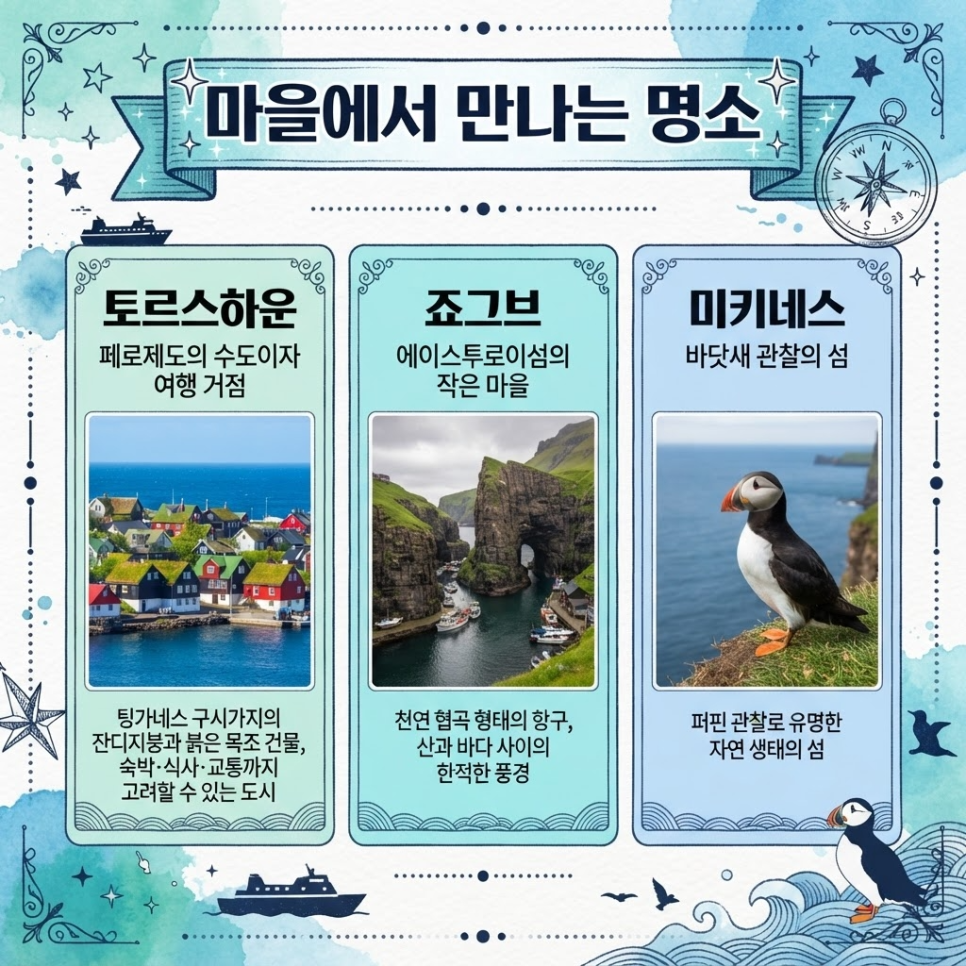
    Tórshavn

    The capital of the Faroe Islands and a great base for exploring the country.

    In the old town of Tinganes, you’ll find a distinctive stretch of streets lined with grass-roofed, red wooden buildings.
    Given its convenient lodging, dining, and transportation options, it’s well worth including in your itinerary.

    Gjógv

    A harbor village on Eysturoy Island, built around a natural gorge.

    Walking through this village nestled between mountains and sea reveals the quiet scenery unique to the Faroe Islands,
    making it a great fit for travelers who’d rather slowly take in nature and village life than visit flashy tourist facilities.

    Mykines

    This island is well known for seabird watching, especially puffins.

    That said, since they’re wild animals, sightings at any specific spot can’t be guaranteed,
    and transportation and access can vary by season, so be sure to check local information before you visit.


    What Should You Know Before Traveling to the Faroe Islands?

    The key to a good Faroe Islands trip is building in flexibility around weather and travel plans.
    That’s because the North Atlantic maritime climate brings frequently shifting rain, wind, and fog.

    Due to the nature of this maritime climate, the weather is known to change several times in a single day.
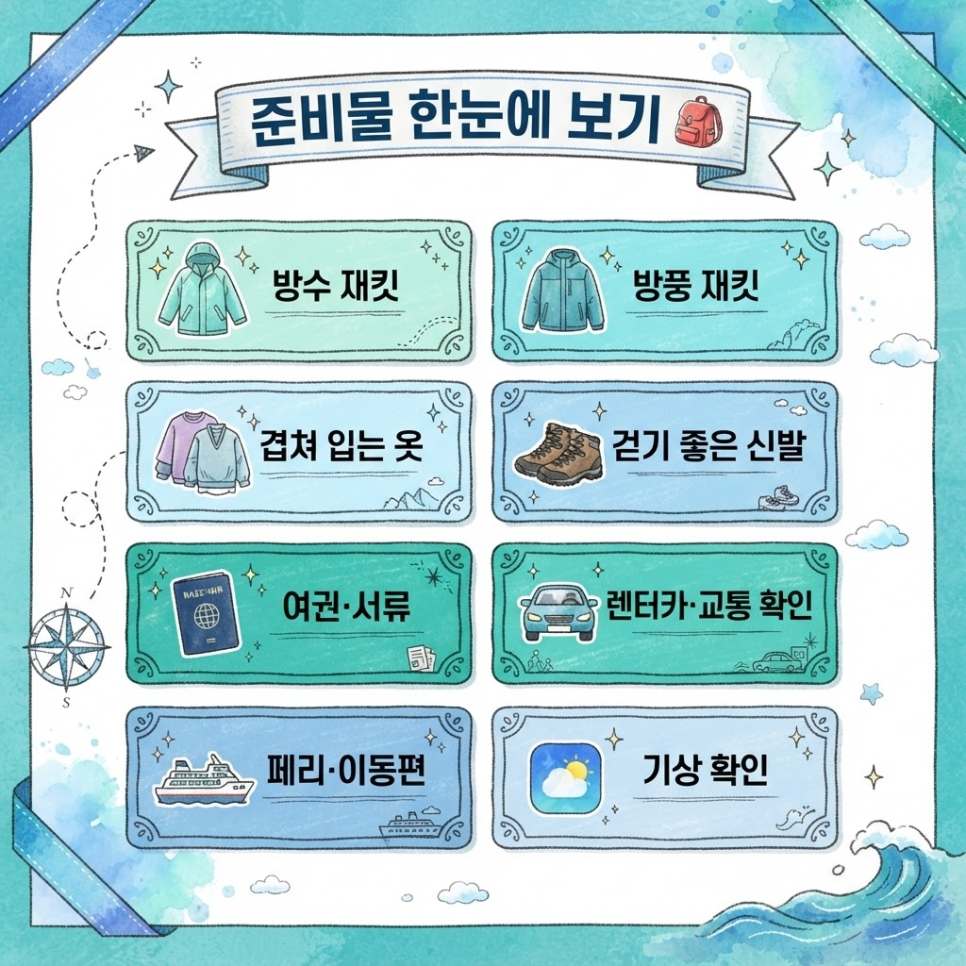
    It’s recommended to pack a waterproof, windproof jacket, layerable tops, and non-slip shoes.

    Faroe Islands things to do, image 6

    Checklist
    ✅ Waterproof, windproof jacket
    ✅ Layerable clothing
    ✅ Comfortable walking shoes
    ✅ Passport and any required entry documents
    ✅ Check rental car and public transportation schedules
    ✅ Confirm ferry, helicopter, and other transport options in advance
    ✅ Check access conditions for each hiking trail
    ✅ Check the day’s weather conditions

    Faroe Islands things to do, image 7

    Things to Keep in Mind
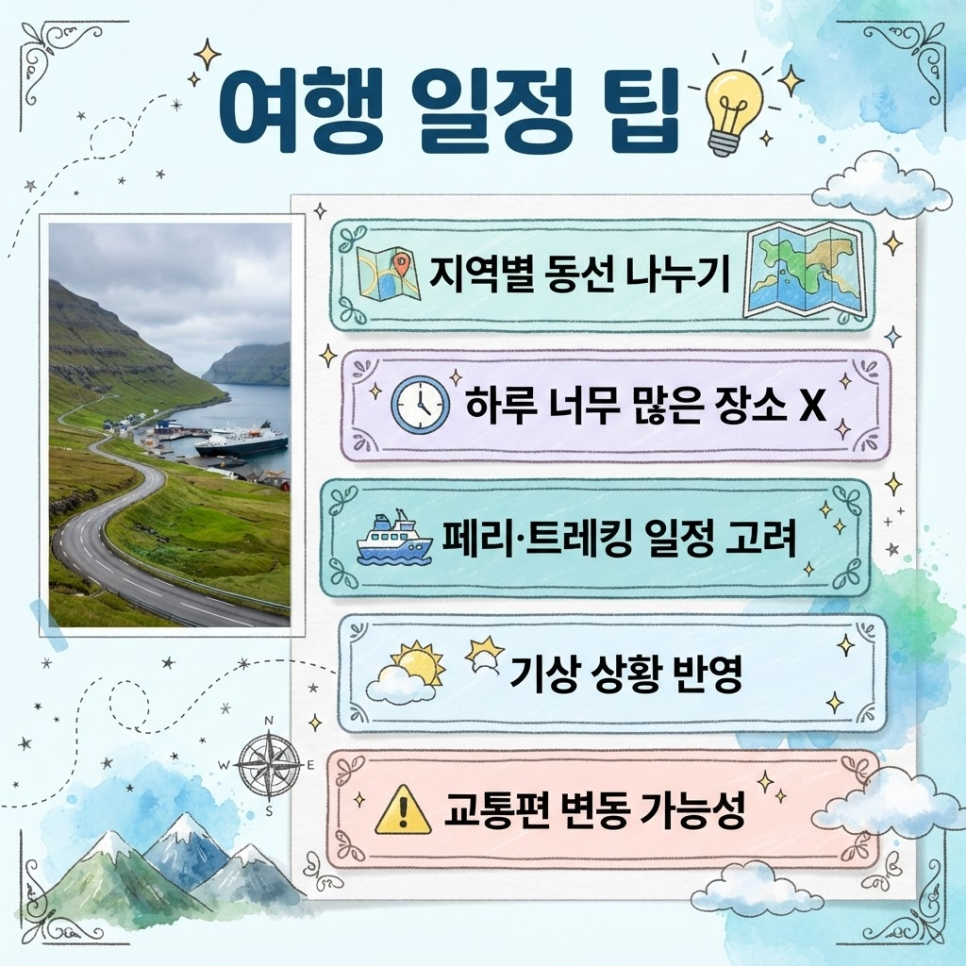
    Some of the best places to visit in the Faroe Islands require hiking, while others can only be reached by ferry.
    Rather than cramming too many stops into a single day, split your itinerary by region, and keep in mind that plans may need to change depending on the weather.

    Faroe Islands things to do, image 8

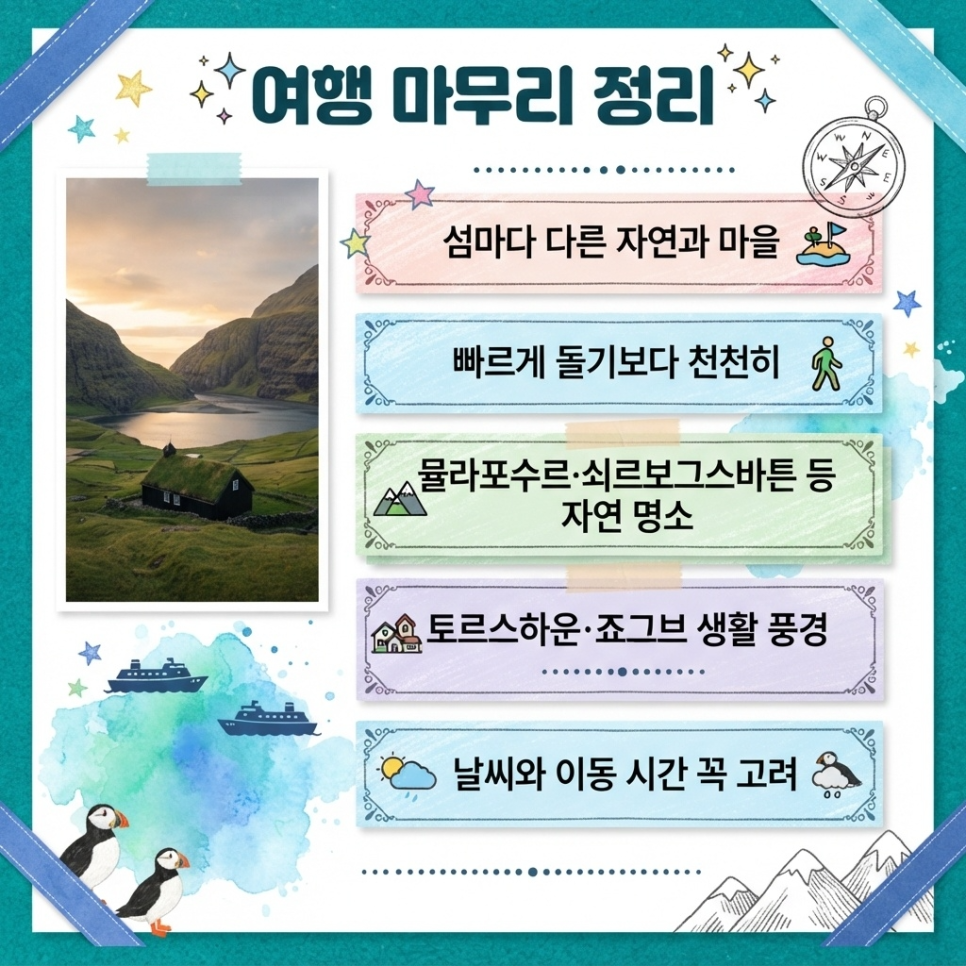
    The Faroe Islands are better suited to slowly exploring the distinct nature and villages of each island
    than to rushing through a checklist of famous sights.

    From dramatic landscapes like Múlafossur Falls and Lake Sørvágsvatn
    to the simple, everyday scenery of Tórshavn and Gjógv, there’s a wide range of experiences to enjoy.

    Faroe Islands things to do, image 9

    Key Takeaway
    If you plan your itinerary with the locations, travel times, and weather of Faroe Islands attractions in mind,
    you can comfortably enjoy scenery that’s rare to find elsewhere in the Nordic region.

    Faroe Islands things to do, image 10

    Faroe Islands things to do, image 11

    Faroe Islands things to do, image 12

    If you like the idea of stepping off a ship to explore islands the way you would in the Faroe Islands, a cruise itinerary covering Northern Europe and the Arctic Circle is also worth a look. You can find related travel information at [Dr. Cruise] Premium Cruise Travel, No Markups.


    Frequently Asked Questions

    1. What country do the Faroe Islands belong to?
    They’re a self-governing region within the Kingdom of Denmark. They’ve had home rule since 1948 and maintain a language and culture separate from mainland Denmark.

    2. Do I need a rental car to get around the Faroe Islands?
    It’s not strictly necessary, but it’s often convenient if your itinerary covers multiple islands and natural landmarks. That said, some islands may require other transportation, such as ferries.

    3. Do I need to pay special attention to the weather when visiting the Faroe Islands?
    Yes — wind, rain, and fog can cause conditions to change quickly. If you’re planning to hike or travel between islands, it’s best to check local weather and transportation updates before you head out.

    4. Why does Lake Sørvágsvatn look like it’s floating above the ocean?
    The lake sits about 32 meters above sea level, while the surrounding cliffs rise more than 100 meters, so the actual height difference isn’t as dramatic as it appears in photos. It’s an optical illusion created by the viewpoint and terrain at certain lookout spots.

    5. Can you always see puffins on Mykines?
    Since they’re wild animals, sightings at any specific time or place can’t be guaranteed. It’s best to check seasonal habitat and ferry information before you visit.


    References

    · Denmark.dk, 「The Faroe Islands is a self-governing country within The Kingdom of Denmark」, Denmark.dk. Link
    · Wikipedia, 「Tourism in the Faroe Islands」, Wikipedia. Link
    · Live Science, 「Sørvágsvatn: The lake that ‘floats’ above the ocean thanks to a unique optical illusion」, Live Science, 2024. Link


    This article is intended for general informational purposes only and does not replace advice tailored to your individual situation.