A waterfall plunges straight from a cliff into the sea,
while a village of grass-roofed houses sits on a green meadow above it.
The scene looks almost too surreal to be real — and it’s the Faroe Islands, tucked away in the middle of the North Atlantic.
If you’ve already been to Iceland and Norway
and you’re looking for a slightly different Nordic destination, this one is worth a look.
In this guide, we cover the best Faroe Islands things to do, organized into natural landmarks and village attractions, along with packing tips and route-planning advice for before you go. From iconic Faroe Islands sights like Múlafossur Falls and Lake Sørvágsvatn to tips on getting around locally, you’ll find everything you need in one place.
What Is the Faroe Islands?
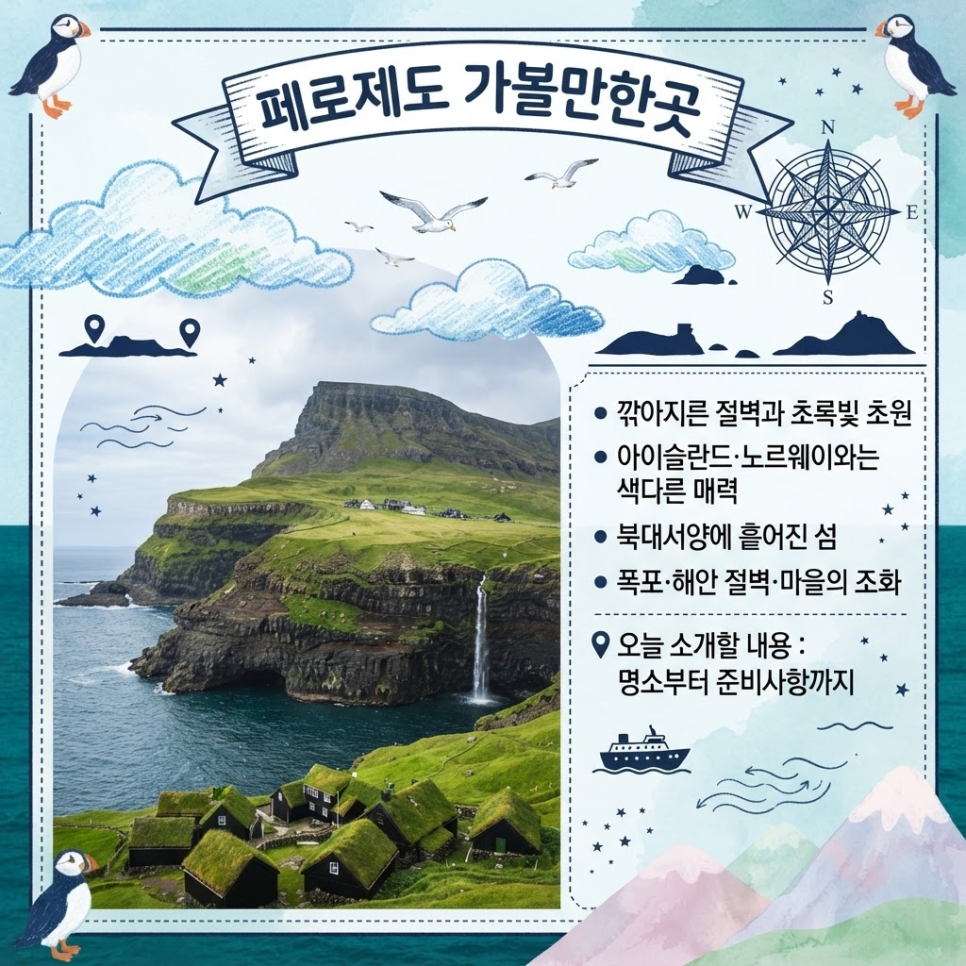
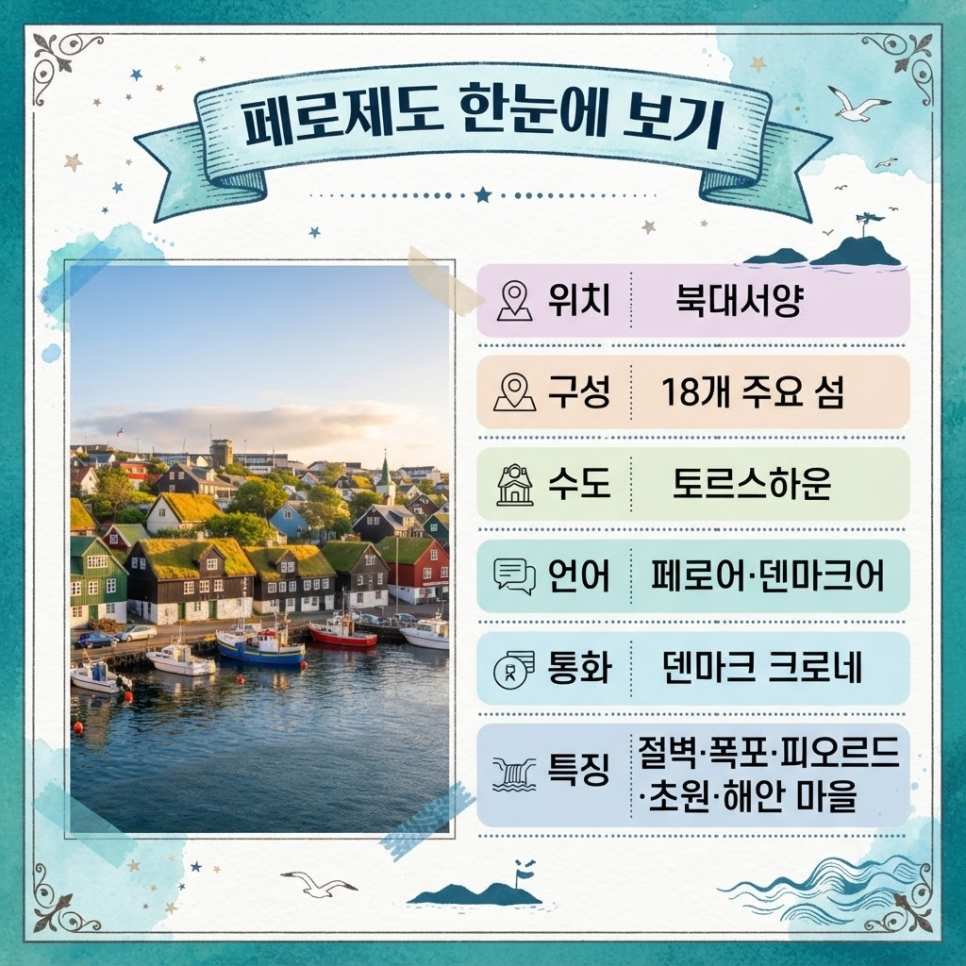
The Faroe Islands is an archipelago of 18 main islands located in the North Atlantic.
It belongs to the Kingdom of Denmark but holds broad self-governing authority, allowing it to maintain a language and culture distinct from mainland Denmark.
It has run its own home-rule government since 1948,
and handles most domestic matters — including education, healthcare, and fisheries — on its own.
Denmark’s government is only responsible for a few areas, such as foreign affairs and defense.
Geographically, it sits in the North Atlantic between Iceland, Norway, and Scotland,
which is why it appeals to travelers looking for a more distinctive Nordic destination.
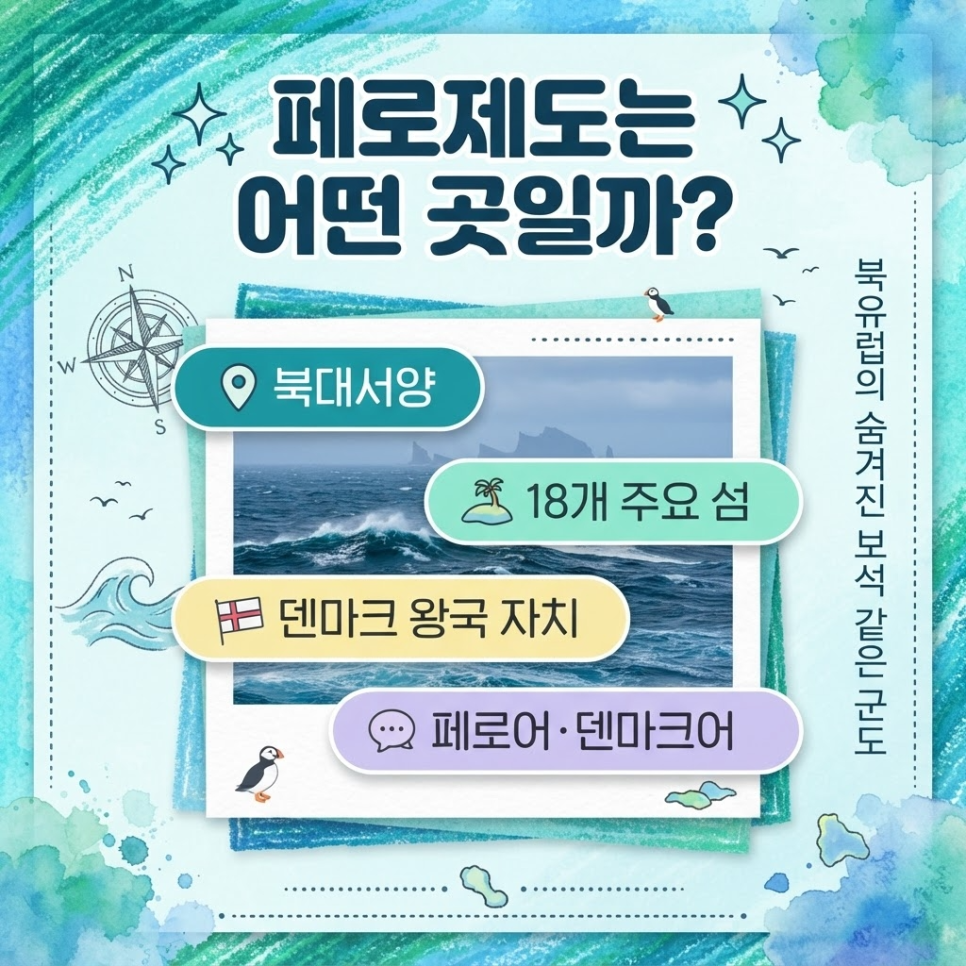
· Location: North Atlantic
· Made up of: 18 main islands (16 inhabited)
· Capital: Tórshavn
· Languages: Faroese, Danish
· Currency: Faroese banknotes, on par with the Danish krone
· Highlights: cliffs, waterfalls, fjords, meadows, coastal villages

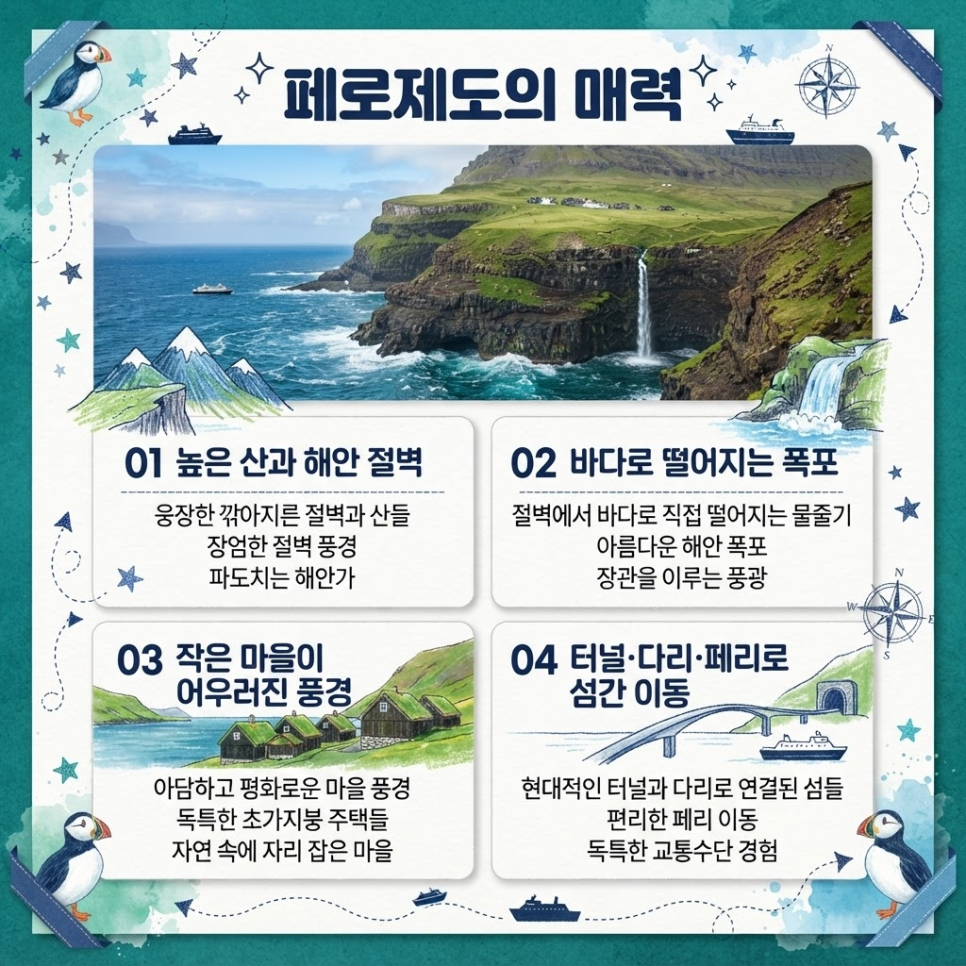
You can travel between islands by tunnel, bridge, or ferry,
but since the best option varies by region, it’s a good idea to map out your route before you go.
Faroe Islands Things to Do: Which Natural Landmarks Should You See?
The heart of any list of Faroe Islands things to do is scenery where cliffs, waterfalls, and meadows come together.
Even within this small island nation, each region looks completely different, so it’s most efficient to build your route around the standout spots.
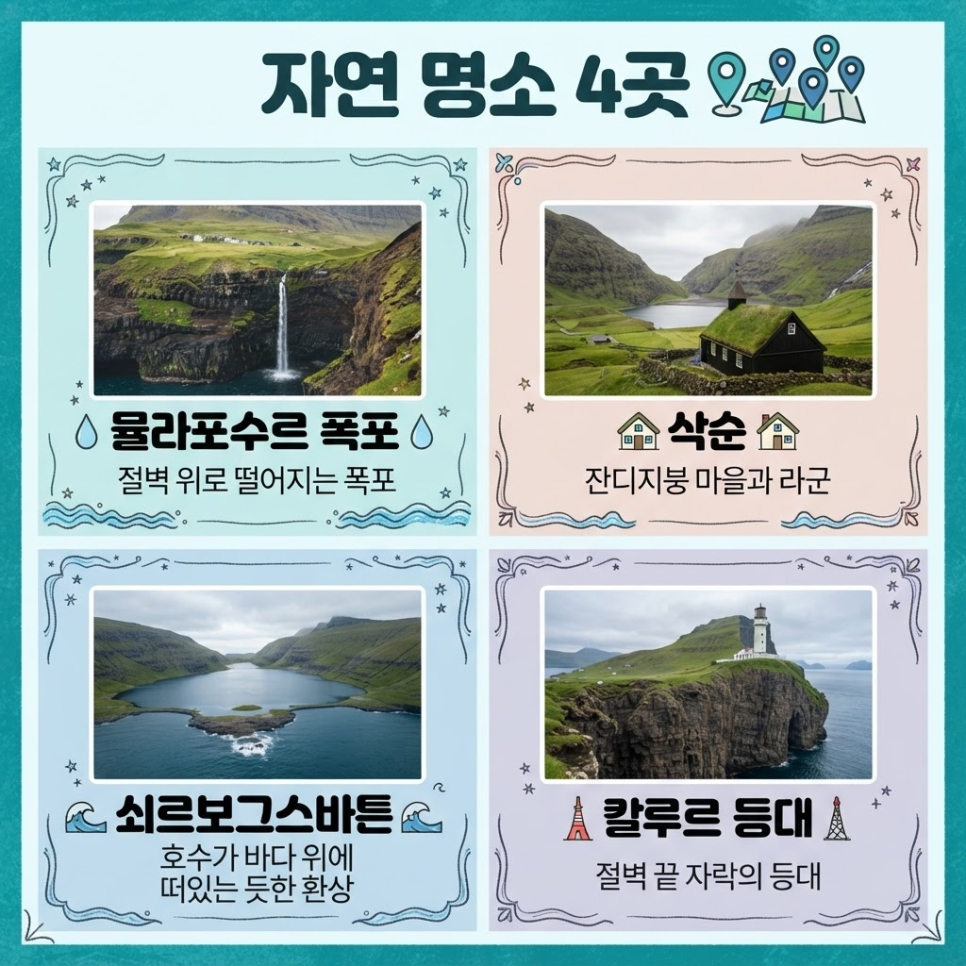
Múlafossur Falls
Located near the village of Gásadalur,
this waterfall is famous for the way its water drops straight from a cliff into the sea.
With green meadows, a village, and the rugged North Atlantic all in one frame,
it’s one of the most iconic images used to represent the Faroe Islands.
It pairs well with a visit to Gásadalur village.
Saksun
This small village is surrounded by mountains, and its traditional grass-roofed houses and lagoon give it a peaceful atmosphere.
Some of the surrounding land and paths may be private property or have access restrictions,
so it’s safest to check local signage and rules as you explore.
Lake Sørvágsvatn
This lake sits remarkably close to the ocean,
and from certain viewpoints it creates the illusion of floating far above the sea.
In reality, the lake is only about 32 meters above sea level, while the surrounding cliffs rise more than 100 meters —
so the height difference isn’t as dramatic as it looks in photos. It’s really an optical effect created by the terrain and camera angle.
If you’re planning to hike here, it’s a good idea to check trail conditions and the day’s weather beforehand.
Kallur Lighthouse
Located at the northern tip of Kalsoy Island,
the hike there offers striking views where steep mountains meet the sea.
Because the terrain is mountainous and strong winds or fog can occur often,
be sure to check the weather and take safety precautions before hiking.
Which Faroe Islands Attractions Can You Find in the Villages?
Faroe Islands attractions aren’t limited to dramatic nature — you’ll also find them in small villages and towns.
Though modest in size, these places let you experience island life and culture up close, and pairing them with natural landmarks makes your trip that much richer.
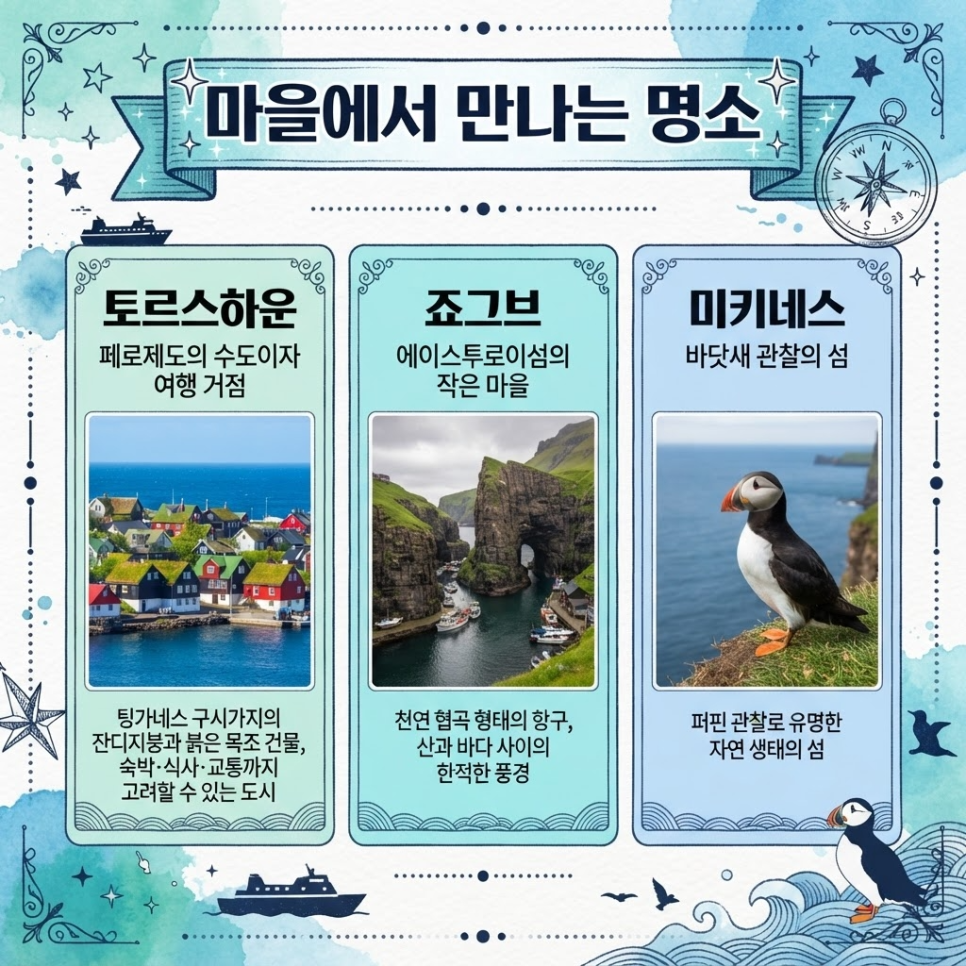
Tórshavn
The capital of the Faroe Islands and a great base for exploring the country.
In the old town of Tinganes, you’ll find a distinctive stretch of streets lined with grass-roofed, red wooden buildings.
Given its convenient lodging, dining, and transportation options, it’s well worth including in your itinerary.
Gjógv
A harbor village on Eysturoy Island, built around a natural gorge.
Walking through this village nestled between mountains and sea reveals the quiet scenery unique to the Faroe Islands,
making it a great fit for travelers who’d rather slowly take in nature and village life than visit flashy tourist facilities.
Mykines
This island is well known for seabird watching, especially puffins.
That said, since they’re wild animals, sightings at any specific spot can’t be guaranteed,
and transportation and access can vary by season, so be sure to check local information before you visit.
What Should You Know Before Traveling to the Faroe Islands?
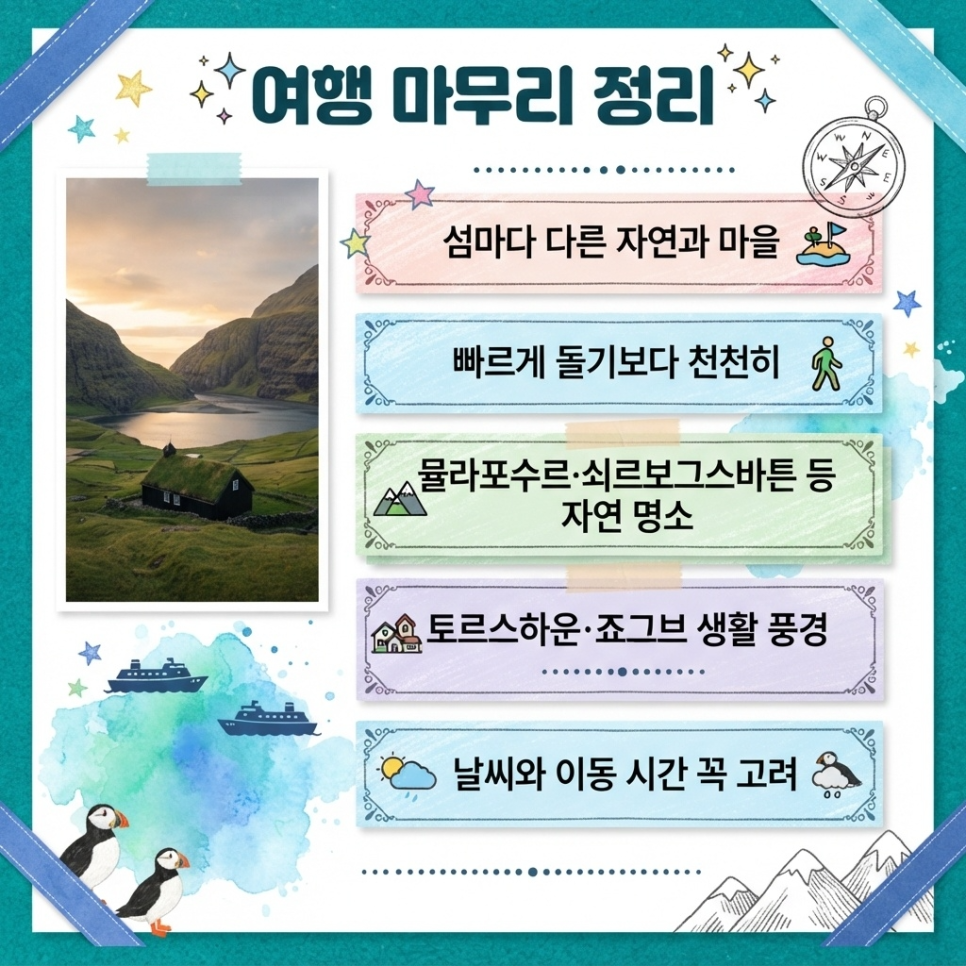
The key to a good Faroe Islands trip is building in flexibility around weather and travel plans.
That’s because the North Atlantic maritime climate brings frequently shifting rain, wind, and fog.
Due to the nature of this maritime climate, the weather is known to change several times in a single day.
It’s recommended to pack a waterproof, windproof jacket, layerable tops, and non-slip shoes.
✅ Waterproof, windproof jacket
✅ Layerable clothing
✅ Comfortable walking shoes
✅ Passport and any required entry documents
✅ Check rental car and public transportation schedules
✅ Confirm ferry, helicopter, and other transport options in advance
✅ Check access conditions for each hiking trail
✅ Check the day’s weather conditions
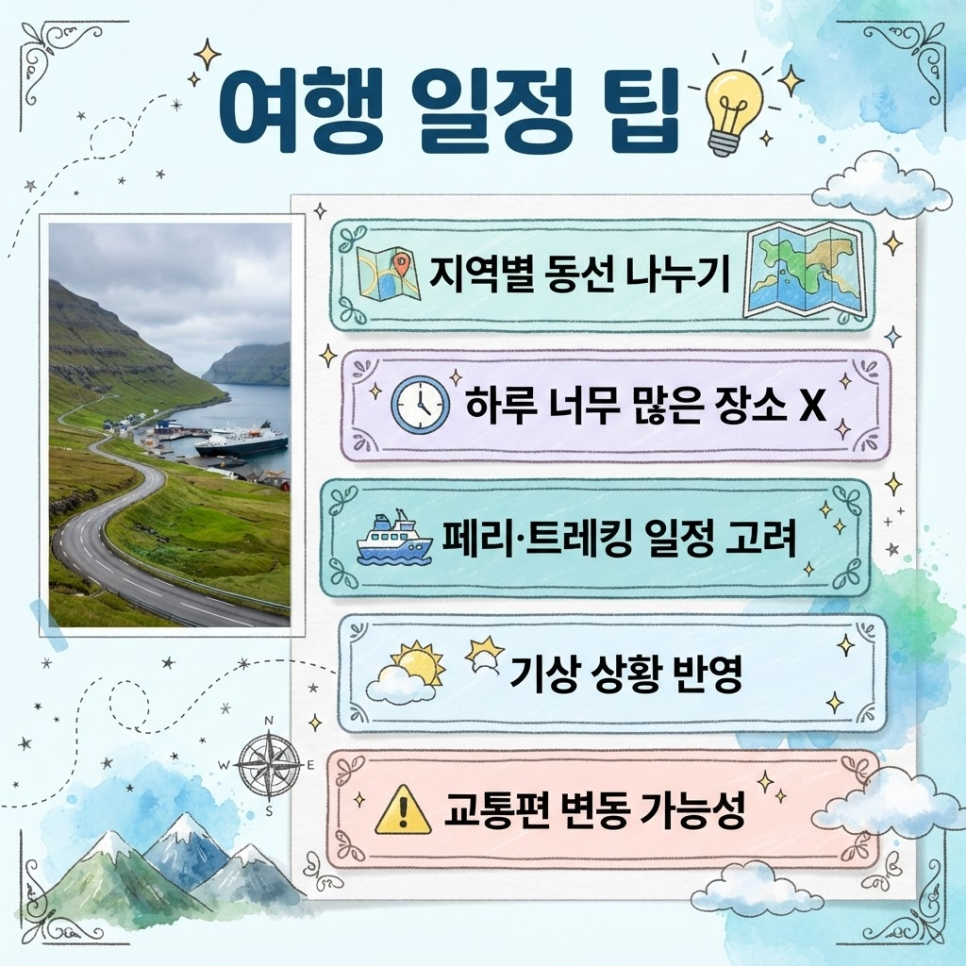
Some of the best places to visit in the Faroe Islands require hiking, while others can only be reached by ferry.
Rather than cramming too many stops into a single day, split your itinerary by region, and keep in mind that plans may need to change depending on the weather.
The Faroe Islands are better suited to slowly exploring the distinct nature and villages of each island
than to rushing through a checklist of famous sights.
From dramatic landscapes like Múlafossur Falls and Lake Sørvágsvatn
to the simple, everyday scenery of Tórshavn and Gjógv, there’s a wide range of experiences to enjoy.

If you plan your itinerary with the locations, travel times, and weather of Faroe Islands attractions in mind,
you can comfortably enjoy scenery that’s rare to find elsewhere in the Nordic region.

If you like the idea of stepping off a ship to explore islands the way you would in the Faroe Islands, a cruise itinerary covering Northern Europe and the Arctic Circle is also worth a look. You can find related travel information at [Dr. Cruise] Premium Cruise Travel, No Markups.
Frequently Asked Questions
1. What country do the Faroe Islands belong to?
They’re a self-governing region within the Kingdom of Denmark. They’ve had home rule since 1948 and maintain a language and culture separate from mainland Denmark.
2. Do I need a rental car to get around the Faroe Islands?
It’s not strictly necessary, but it’s often convenient if your itinerary covers multiple islands and natural landmarks. That said, some islands may require other transportation, such as ferries.
3. Do I need to pay special attention to the weather when visiting the Faroe Islands?
Yes — wind, rain, and fog can cause conditions to change quickly. If you’re planning to hike or travel between islands, it’s best to check local weather and transportation updates before you head out.
4. Why does Lake Sørvágsvatn look like it’s floating above the ocean?
The lake sits about 32 meters above sea level, while the surrounding cliffs rise more than 100 meters, so the actual height difference isn’t as dramatic as it appears in photos. It’s an optical illusion created by the viewpoint and terrain at certain lookout spots.
5. Can you always see puffins on Mykines?
Since they’re wild animals, sightings at any specific time or place can’t be guaranteed. It’s best to check seasonal habitat and ferry information before you visit.
References
· Denmark.dk, 「The Faroe Islands is a self-governing country within The Kingdom of Denmark」, Denmark.dk. Link
· Wikipedia, 「Tourism in the Faroe Islands」, Wikipedia. Link
· Live Science, 「Sørvágsvatn: The lake that ‘floats’ above the ocean thanks to a unique optical illusion」, Live Science, 2024. Link
This article is intended for general informational purposes only and does not replace advice tailored to your individual situation.
Leave a Reply